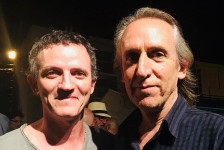
Es más divertido lidiar con retos y aprender para poder mejorar (Tommy Alexandersson)
Por José Ramón González.
Traducción: Ainara Gómez Pizarro.
English version below.
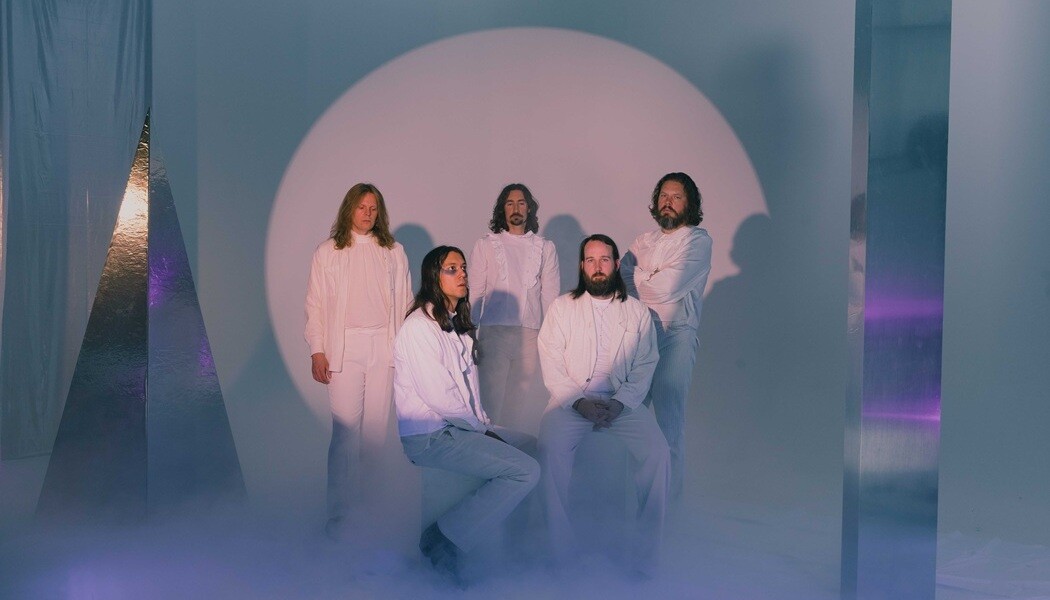
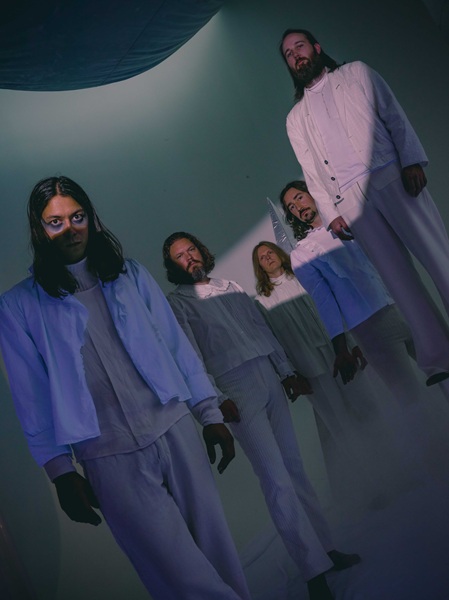
Teníamos muchas ganas de hablar con Tommy Alexandersson, de Halläs, quienes han grabado un álbum, Panorama, deslumbrante, complejo y magnético, tal como exponíamos en la reseña que hicimos con motivo del lanzamiento del álbum. Ha llevado un poco de trabajo, pero a cambio Tommy nos ha regalado una entrevista generosa en la que nos explica su visión del mundo y de la música y nos habla de sus inclinaciones cinematográficas y literarias.
Hola, Tommy, muchas gracias por atendernos. Nos hacía mucha ilusión hablar contigo. Acabáis de volver de una gira europea, ¿qué tal ha ido?
Creo que ha ido muy bien. Fue una buena gira en la que visitamos muchas ciudades bonitas y los conciertos estuvieron geniales.
Presentáis vuestro nuevo álbum, Panorama, que a nosotros nos ha encantado. ¿Habéis notado en la afluencia de público la repercusión que haya tenido este disco?
No lo sé, creo que aún es muy temprano para decirlo. En la gira europea alcanzamos aforos de hasta cuatrocientas, quinientas, seiscientas y setecientas personas. Hemos tenido algunos conciertos agotados. ¡Me alegro mucho de que podamos continuar tocando y que la gente vaya a vernos!
Yo os he conocido hace relativamente poco tiempo. Para mí sois una banda rodeada de misterio, sois como personajes venidos de otro tiempo. ¿Puedes contarme algo sobre la creación de la banda?
Desde el principio creamos una especie de mundo de ensueño. Un mundo alternativo. Todos nosotros somos personas algo tímidas y recuerdo que al principio nos daba miedo salir al escenario y tocar en vivo. Por supuesto, todos nosotros estábamos muy interesados en la narrativa, ciencia ficción y fantasía. Así que hemos creado una especie de universo en el que todas nuestras historias puedan encajar. Creo que hay muchas cosas que podríamos incorporar en este mundo, hay muchas historias que contar. ¡Es nada más ni menos que un universo de fantasía y ciencia ficción!
Puede que el hecho de que hagáis una música muy ligada a los setenta, la psicodelia y el rock progresivo, vinculada a una época repleta de magnetismo, acentúe estos aspectos enigmáticos de los que hablamos. Con vuestra música siento que he encontrado a una banda desconocida de hace cincuenta años, como en el videoclip de Deep Purple «Knocking at your back door». ¿Qué relevancia tiene para vosotros la música psicodélica, el hard rock y el rock progresivo?
Eso se atribuye sobre todo a la música que escucho. Son géneros muy importantes para mí. Creo que es como la base de nuestra música. Y claro que nos gusta mezclar también otros géneros. Para mí la esencia de Hällas reside en el hard rock, rock progresivo, algo de música psicodélica y folk.
Sin embargo, cuando escucho vuestros discos tengo clara una cosa: a pesar de ese sonido puedo decir que no había escuchado nunca nada como lo que hacéis. ¿Dónde piensas que reside vuestra singularidad?
De verdad que no lo sé. Aunque nos guste la música tradicional de los años 70 y 80, mezclamos algunos otros géneros en nuestra música. Por ejemplo, utilizamos muchísimo las guitarras gemelas. Pero, así como podemos tocar con guitarras gemelas, al mismo tiempo podemos tocar con una guitarra y un sintetizador en armonía. Y creo que eso podría cambiar un poco el sonido. Vamos a decir que en vez de sonar como Iron Maiden o Wishbone Ash, pueden sonar casi iguales, pero ligeramente diferentes. En realidad, no estamos ligados a ningún género. Vamos por libre.
Y por supuesto, todos nosotros somos músicos individualmente diferentes, con diversos trasfondos musicales. Mi trasfondo musical viene del blues, el rock y puede que un poco del soul, y todos esos tipos de géneros. Pero Marcus ha estado escuchando un montón de black o death metal. A Rickard le gusta más el rock de los años 60, Nicklas escucha mucha música con sintetizadores. A Kasper le gusta más la música de los años 80. Todos tenemos diferentes trasfondos musicales y estilos que nos gustan, los metemos en nuestra música y los mezclamos conjuntamente. Eso da lugar a Hällas.
Vuestro nuevo álbum, Panorama, comienza con una composición de veintiún minutos. ¿Fue algo premeditado o surgió de manera improvisada?
Desde el principio dijimos que queríamos crear una canción muy épica que ocupase una cara del vinilo, y Nicklas tenía algunas ideas que sonaban como si pudiera ser una canción muy larga. Después mezclamos algunos riffs y otras pistas secundarias. ¡El arreglo fue muy difícil pero también muy divertido de crear! Nos costó mucho componer toda esta música, así que fue un reto y al mismo tiempo un cambio muy ameno. No creo que muchas de nuestras canciones hayan sido improvisadas. No se nos da bien trabajar de tal manera. Compusimos todo y fuimos avanzando poco a poco en la canción, añadiendo fragmentos y alargándola cada vez más. Fue difícil, pero muy divertido.
Ocurre en ocasiones que algunos aficionados rehúsan escuchar canciones extensas. ¿Podría interpretarse como un gesto desafiante ante la realidad contemporánea en la que la mayoría de los ciudadanos pasan por encima de todo, no se detienen ni prestan atención a las creaciones artísticas? ¿O es únicamente una cuestión musical?
Sí, de hecho, quisimos brindarle al oyente un reto desafiante. Muchas de las canciones actuales son tan simples que no tienes que pensar en lo que estás escuchando. Las canciones son tan simplificadas y a veces pueden ser muy aburridas. Gran parte de la música actual suena muy similar. «Above the Continuum» es casi como una canción de protesta contra la música moderna. Pero muchas de las bandas de los años 70 como Rush, o Yes o Gentle Giant no optaban por canciones cortas, sino por las largas. Ellos querían expandir sus universos y creatividad. Así que además nosotros también quisimos expandirlos, ir más allá y ver qué podíamos hacer, cómo una canción podría sonar si no siguiéramos el mismo patrón predecible. A mí me gusta escuchar música que no sea necesariamente “buena”, podría ser interesante. A veces disfruto mucho más escuchando ese tipo de música.
¿Qué te gustaría que aportara vuestra música a un mundo tan convulso como el nuestro, qué os gustaría que transmitiera?
Quisimos aportar una manera de pensar más profunda que el modo en el que funciona el mundo en el que nos encontramos ahora mismo. Deberíamos pensar más en nuestro entorno, nuestra sociedad y las personas, la gente que nos rodea. Muchas personas, incluyéndome a mí, simplemente vivimos y seguimos los pasos de otra persona. Hacemos lo mismo que todos los demás y no pensamos en lo que estamos haciendo. Queremos a oyentes que se paren al menos por un rato y que contemplen cómo están llevando sus propias vidas o las cosas que quieren cambiar, cómo podemos hacer del mundo un lugar mejor, o cómo podemos hacer sentir mejor al otro.
Aunque muchas de vuestras canciones tienen una complejidad evidente, la melodía tiene una presencia decisiva. ¿Cómo condiciona ésta el desarrollo de las canciones a la hora de componer?
Para mí las melodías siempre son importantes. Escucho mucho folk, en el cual las melodías son la parte más importante de las canciones. Me gusta que la música sea compleja o difícil, pero al mismo tiempo debería tener melodías buenas, partes que sean buenas. No necesariamente debe tener un buen estribillo, debería tener una melodía que te haga recordar la canción. Pero también debería tener algunas partes más complicadas que te hagan recordarla. Una buena melodía no necesariamente tiene que ser melódica en el sentido tradicional, podría tratarse de una melodía que sea muy breve o partida en pequeños tonos.
Creo que la música de Hällas tiene cierto tono cinematográfico, una especie de dramatismo muy propio del medio cinematográfico. ¿Tiene el cine, o algún género en particular, influencia en vuestra música?
Por supuesto. Crecí con un padre al cual le gustaba mucho la fantasía e historia. Así que cuando era pequeño, íbamos a torneos medievales, incluso al cine a ver El Señor de los Anillos o Robin Hood. De pequeño también leía libros sobre el Rey Arturo. Siempre me ha interesado mucho la Edad Media. Además, recuerdo que cuando vimos la trilogía de El Señor de los Anillos, me gustaba mucho su propia fantasía, la magia, las cosas no humanas, más imaginativas, fantasiosas, irreales. Son muy amenas. Cuando fui creciendo, siempre me llamaron la atención Star Wars, la fantasía y la ciencia ficción. Creo que es porque cuando me encuentro con ese tipo de películas y libros, puedo relajarme, prestar atención y engancharme. Es por eso por lo que me apegué a ello.
¿Alguna película que esté entre tus favoritas o que haya servido de inspiración para alguna de vuestras canciones?
Hay muchas películas que son muy buenas. Una película que de hecho nos ha servido de inspiración es Los caballeros de la mesa cuadrada y sus locos seguidores (Monty Python and the Holy Grail. Terry Jones, Terry Gilliam, 1975). Aunque se trate de una película de comedia, tomamos cierta inspiración cinemática de ella. También tomamos inspiración de El Señor de los Anillos (¡la versión animada!) (The Lord of the Rings. Ralph Bakshi, 1978). Recuerdo haberla visto de pequeño, cuando Sam, Frodo, Merry y Pippin estaban sentados por debajo de las raíces de un árbol y uno de los Nueve Jinetes se alzó sobre ellos. Los ojos del caballo estaban brillando y era una especie de demonio el que estaba sentado sobre ese caballo. Estaba tan aterrorizado, me hizo sentir miedo. Ese momento nunca se me olvidará.
Cuando era pequeño, también veía películas suecas: me gustaban las películas suecas de El caballero templario (Arn – Tempelriddaren. Peter Flinth, 2007, y continuaciones) sobre un caballero ficticio llamado Arn Magnusson. Me gustaban esas películas cuando era pequeño.
También me parece relevante el aspecto narrativo y cierto componente mitológico y/o épico. Parece que es importante para vosotros que las canciones cuenten historias ¿no?
Sí, es sumamente importante. Siempre me ha interesado la narrativa. Una película debería tener una buena historia, al igual que una canción también debería tenerla. Una canción debe tener siempre una historia, lo cual proviene de la música folk sueca (o como también nosotros la llamamos, svensk visa), la canción siempre contiene una historia. A lo mejor no debe contar con un final, pero sí con una buena narración… Con eso quiero decir que me gusta una historia que se pueda seguir. Es lo primordial para mí.
Al igual que con el cine, ¿hay géneros literarios que os sirvan de inspiración? ¿Tienes algún autor o títulos favoritos?
No leo tanto como lo hacía en su día, pero me gusta leer antiguos autores suecos, de principios del siglo 20. Es porque me gusta mucho el lenguaje que tienen y cómo utilizan las palabras. Es una buena fuente de inspiración según como quieras contar las cosas. Pero si tuviese que nombrar a un autor, nombraría la obra de Singoalla, de Viktor Rydberg. Es una obra antigua, pero con una trama muy buena. Así que, si quieres leer algo sueco, échale un vistazo a ese libro. [No hay, por el momento, ediciones en español de la obra de Rydberg.]
Las canciones vienen firmadas por el grupo al completo. ¿Cómo repartís las tareas?
Consideramos a cada integrante de igual importancia, incluso si no acaban creando una canción completa. Aun cuando escribo muchas letras y me encargo de la parte cantada, necesito a la batería para poder imaginarme aquellas palabras. Así que todos son igualmente importantes. Es bastante simple: en Panorama, con la balada breve de «Bestiaus», que compuse yo mismo, a todos en la banda les pertenece esa canción. De todas maneras, se siente bien repartir el trabajo con los demás. Compartimos lo que hacemos con el otro. Sin ellos, no creo que hubiese sido capaz de componer esa canción, aunque la haya compuesto yo mismo.
A veces cuando nos ponemos a grabar, Marcus y Rickard se encuentran en el estudio grabando las guitarras a solas. Puede que yo o Kasper no estemos allí. Después yo llego y grabo algunas pistas de voz. Nicklas puede añadir unos sintetizadores y órgano por su cuenta. Cada uno se encarga de su propio instrumento. Pero, además, al mismo tiempo tocamos los instrumentos del otro. He estado dejando grabadas pistas con la guitarra y el piano mientras que Nicklas y Marcus hacían lo mismo con el bajo… No tenemos normas estrictas.
A propósito, tu voz es muy peculiar, muy especial y reconocible, al igual que tu manera de cantar. ¿Has cantado siempre?, porque además eres bajista.
No, no siempre he cantado. De verdad que todavía no me considero un cantante. Solamente iba a ser el cantante en la banda hasta que pudiéramos encontrar a un cantante adecuado. Todavía soy el cantante, hasta el momento no hemos dado con nadie más. Nunca pensé que sería un cantante porque yo no sabía que podía cantar, nunca lo había intentado. Después comencé a cantar y pensé que era muy divertido. Y sí, también soy bajista. De hecho, soy guitarrista, pero al principio se me hacía muy complicado cantar y tocar la guitarra al mismo tiempo. Así que, en vez de eso, comencé a tocar el bajo. También puede ser un poco difícil tocarlo al mismo tiempo, pero es más divertido lidiar con retos y aprender para poder mejorar.
Por cierto, para este disco ha entrado en la banda como guitarrista Rickard Swahn por Alexander Moriartis. ¿Qué ha aportado a la banda?
Rickard entró en la banda cuando estábamos con poca energía. Alex se había separado de la banda y tuvimos el descanso de la pandemia. No sucedió gran cosa y estuvimos en el estudio por mucho tiempo. Tal vez perdimos un poco el hilo. Cuando Rickard llegó, trajo mucha energía y nos hizo sentir mejor de nuevo. Él es muy buen músico y guitarrista. Así que está muy bien tocar con él. Vino a la banda con gran facilidad y tomó su lugar en la banda tranquilamente. Su presencia ha sido muy importante para la banda y este disco.
Me resulta especialmente emocionante la canción que cierra Panorama. Es épica. Me parece reconocer en ella trazas de Led Zeppelin, Uriah Heep o Kansas. ¿Qué puedes contarme de esta composición?
«At the Summit» fue creada sobre todo a partir de las ideas de Rickard. Creo que rápidamente se convirtió en la última canción, porque tenía todos esos elementos indicados: una introducción épica con guitarra acústica, lo cual era algo que no habíamos hecho antes, un comienzo muy rápido y partes melódicas. Me parece una muy buena canción, es una de mis favoritas del nuevo álbum. De hecho, todavía no la hemos llegado a tocar en vivo, pero esperamos poder hacerlo en el futuro.
La canción es más bien una historia simbólica sobre estas personas de las que cantamos, que viajan por esas tierras de ceniza, y se reúnen en la cima de una montaña para realizar algún tipo de ritual o rezar a los dioses y sacrificarse por algo. Es difícil contar la historia, pero sí, creo que es una muy buena canción.
A algunas bandas es difícil verlas fuera del circuito de los festivales. Parece que hay una tendencia a limitar la música en directo a festivales, hay cada vez más. ¿Qué opinión te merece esto?
Actualmente es muy caro irse de tour. Los viajes, el alojamiento, la comida, todo. Así que, para tocar en un festival con muchos asistentes, tal vez tengan que pagar un poco más que por un concierto en un club del mismo país o zona. Además, los festivales a veces tienen dicha exclusividad: no puedes anunciar ningún concierto antes de tocar en tal festival, y eso también podría ser un poco problemático, porque la planificación de un concierto en un festival o club se realiza con muchos meses de antelación. Y hoy en día creo que a veces parece más difícil conseguir que la gente venga a un concierto, así que hay que anunciarlo con suficiente antelación para que la gente pueda planificar y decidir si ir. Es cierto que una entrada para un festival casi siempre es más cara que una para un solo concierto, pero necesitamos ambas cosas. Necesitamos los conciertos en salas y necesitamos los festivales. Y debería haber conciertos para todos, a precios asequibles para todos o para los que todos puedan ahorrar. La música debería ser asequible para todo el mundo. Eso es lo más importante.
Nos encantará veros por España, de la manera que sea. El próximo junio tocáis aquí en un festival, así que esperamos disfrutar mucho con vuestra música. Muchas gracias por atendernos y mucha suerte con vuestro nuevo álbum.
Muchísimas gracias y espero veros en el Azkena Rock Festival en España. Ha sido un placer hablar con vosotros, ¡adiós!
English version.
By José Ramón González.
Hello Tommy, thanks for attending us. We were very much looking forward to speaking with you. You have just come back from a European tour leg. How did it go?
I think it went really good. It was a good run with many nice cities that we visited and the concerts were great.
You have released your new album, Panorama, which we have loved very much. Have you noticed the repercussion this album may have had in the concert audience’s attendance?
I don’t know. I think it’s a little bit too early to say. On the European run we did like four, five, six, seven hundred capacities. We had some sold out shows and I’m very glad that we can keep on playing and people show up!
I have relatively known your music for a short time. To me you are a band surrounded by mystery, as if you were characters who come from another timeline. Can you tell me a bit about the band’s creation?
From the beginning we created some kind of dream world. Another world. I think we are all a little bit shy persons and I can remember in the beginning we were kind of afraid to go on stage and perform. All of us were of course very interested in storytelling and science fiction and fantasy. So we have created some kind of universe that all of our stories can fit into. And I think there is a lot of things that could go into this world, there’s a lot of stories to be told. But it’s some kind of fantasy science fiction universe!
The fact that you make music associated to the seventies, psychedelia and progressive rock, which are linked to a time period filled with magnetism, accentuate these mysterious elements we are speaking of. I feel with your music as if I have found an unknown band from fifty years ago, like Deep Purple’s «Knocking at your back door» music video. Which relevance does the psychedelic music, hard rock and progressive rock have for you?
That’s mostly the music that I listen to. So it’s very important genres for me. I think it’s like the foundation in our music. And of course, we like to blend in some other genres too. But the backbone of Hällas for me is the hard rock and the progressive rock and some psychedelic and folk music.
However, when I listen to your music I have a clear thing in mind: despite that sound type, I can say I had never listened before to anything else that sounds like the music you make. Where do you think your musical singularity resides in?
I don’t know really. But even if we like traditional music from the 70s and 80s, I think we blend in some other genres into the music. For instance, we play a lot of twin guitars. But as often as we play twin guitars, we can play one guitar and one synthesizer at the same time in harmonies. And I think that might change the sound a little bit. Instead of sounding like, let’s say Iron Maiden or Wishbone Ash, you can sound almost the same, but a little bit different. And we are not really tied to any genre. We can go in any direction we want.
And of course, we are all individually different musicians, with different backgrounds. I come from like blues, rock and maybe more soul and those kinds of genres. But Marcus has been listening a lot to black metal or death metal. And Rickard is more from like 60s rock music. And Nicklas listens to a lot of synthesized music. And Kasper is more 80s. So we all have different backgrounds and different styles that we like and take into the music and mix it all together. And that becomes Hällas.
Your new album begins with a twenty-one-minute arrangement, «Above the Continuum». Was the arrangement a premeditated idea or did it come up in an improvised way?
From the beginning, we said that we wanted to create a really epic song that would be one side of the vinyl. And Nicklas had some ideas that sounded like it could be a really long piece of music. And we blended in some other riffs and some other side tracks. The arrangement was very difficult to do. But it was also very fun to do! And it was very hard for us to write this music. So it was a bit of a challenge, but a very fun challenge. I don’t think much of the music is improvised. We are not really good at working in that way. We wrote everything and took small steps in the song, adding bits and pieces of writing, making it longer and longer. It was hard, but it was really fun.
Occasionally some music enthusiasts refuse to listen to long songs. Could it be interpreted as a challenging gesture towards the contemporaneous reality in which citizens walk all over everything, do not take their time nor do they pay attention to artistic creations? Or is it just a musical matter?
Of course, we wanted to give the listener a challenge, a challenging listening. So much music today is so simple that you don’t have to think about what you are hearing. It’s so simplified and sometimes very boring. And a lot of music today sounds the same. So we wanted to do something else. «Above the Continuum» is almost like a protest song to the modern music. But many bands in the 70s, like Rush or Yes or Gentle Giant, didn’t go for the short tracks. They went for the long tracks. They wanted to expand their universes and their creativity. So we also want to expand and go further and see what we can do and see how a song could sound like if we don’t follow any predicted pattern. Myself, I like listening to music that is not necessarily «good» music — it could be interesting music. I sometimes enjoy more to listen to that kind of music.
What would you like your music to contribute to a turbulent world as ours? What would you like it to convey?
On this track, we want to contribute with some deeper thinking of where we are right now, how the world works. We should think more about our environment, our society, the people next to us. Many people, including myself, we just live on and follow the footsteps of another person. We just do as everyone else. And we don’t think about it. So we want listeners to maybe stop for a while and contemplate about how they are living their life or what kind of things they want to change, or how we can make the world a better place or how we can make another person feel better or be happy.
Although some of your songs contain an apparent complexity, the melody takes a decisive presence. How does the melody condition the songs’ development upon composing them?
For me, the melodies are always very important. I listen to a lot of folk music, where the melodies are the most important part of the songs. And I like music to be complex or difficult, but at the same time it should have good melodies, good parts. It doesn’t necessarily have to be a good chorus or a good refrain — it should have good melodies that make you remember the song. But it should also have some more difficult parts that you might also remember. A good melody doesn’t necessarily have to be melodic in the traditional sense — it could be a melody that’s very short or chopped up in small tones.
I think that Hällas’ music includes a certain cinematographic tone, a sort of dramatism, which is very characteristic of the cinematographic media. Do films, or any specific genre have an influence over your music?
Of course. I grew up with a father that was very interested in fantasy. He was also very interested in history. So when I was a child, we went to like medieval tournaments or we went to the cinema to see Lord of the Rings or Robin Hood. I read King Arthur as a child. I was always very interested in the medieval ages. But also I remember when we saw Lord of the Rings, the trilogy, I really liked the fantasy part of it, the magic, the things that were not really human, more imagined — more dreamy, more unreal. I think that’s very fun. And of course, growing up looking at Star Wars or sci-fi and fantasy — these always hooked my attention. I think it’s because when I encounter those kinds of movies and books, I can relax, I pay attention to the story, I get hooked into it. So I think that’s why I got stuck to this.
Do you have any favourite films that may have served as inspiration for some of your songs?
There are a lot of good films. One movie that actually inspired us is Monty Python’s The Holy Grail. Even if it’s a comedy, we took some cinematic inspiration from that. But of course, Lord of the Rings (the cartoon!). I remember seeing it as a child, when Sam and Frodo and Merry and Pippin are sitting underneath the roots of a tree, and one of the nine riders stands over them. The eyes of the horse are glowing and he’s like some kind of demon sitting on that horse. I was so afraid. It made me feel fear. That moment always stuck with me.
Also as a child I saw Swedish films — the Swedish Templar Knight movies about a fictive knight called Arn Magnusson. I liked those movies as a child.
I find the narrative aspect and mythologic or epic aspects relevant as well. It seems important for you that your songs tell stories, isn’t it?
Yes, it’s very important. I have always been interested in storytelling, because just as a film should have a good story, a piece of music should also have a good story. And it also comes from the Swedish folk music (or as we call it – svensk visa), the song always has a story. Maybe not with an end, but good storytelling… I mean, I like a good story that you can follow. That’s the thing for me.
Do you have any favourite author or book?
I’m not reading as much as I used to these days, but I like to read Swedish authors, old authors, maybe from the beginning of the 1900s, because I like the language and how they use the words. It’s very good inspiration for how you can tell things. But if I should name one author, I would say Viktor Rydberg’s book ”Singoalla”. It’s an old book with a really good story. So if you want to read something Swedish, look for that book.
The songs are signed by the whole band. How do you distribute tasks with the band?
We see it as every person in the band being equally important, even if you don’t come up with a whole song or anything. Even if I write a lot of text or vocals, I need the drums to be able to imagine those words. So everybody’s as important. And it’s also very simple, on Panorama the short ballad song «Bestiaus» that I wrote entirely myself, it still feels good to split it. Everybody owns that song in the band. We share it with each other. Without them, I don’t think I would have been able to write that song, even if it’s written by me.
Sometimes when we record, Marcus and Rickard are in the studio only recording guitars. I might not be there, or Kasper might not be there. Then I come in and record some vocals. Nicklas can put some synthesizers and organs by himself. Everybody takes care of their own instrument. But at the same time, we also play each other’s instrument. I’ve been laying down some guitars on tracks and piano, and Nicklas and Marcus have put down some bass lines.. We don’t have any strict rules.
By the way, your voice is very peculiar, special and recognisable, just like your way of singing. Have you always been singing? Besides that, you’re also a bassist.
No, I have not always been a singer. I’m still not a singer, really. I was only going to be the singer in the band until we could find a proper singer. I’m still the singer — we haven’t found anyone else. But I never thought I would be a singer because I didn’t know I could sing. I had never really tried it. But then I started to sing and thought it was really fun. And yes I’m also a bass player. Or actually, I’m a guitar player. But when we started, it was too hard for me to sing and play guitar. So I played bass instead. It can be kind of hard to play bass at the same time too, but it’s great fun to have challenges and to learn and get better.
On another note, for this album Rickard Swahn has joined the band as a guitarist in Alexander Moraitis’ place. What has Rickard Swahn contributed to the band?
I think Rickard came into the band when we were kind of low on energy. Alexander had parted ways with the band and we had had the pandemic break. Nothing really happened and we were in the studio for a long time. I mean, we maybe lost track a little bit. When Rickard came in, he brought a lot of energy and he made us feel better again. And he’s also a very good musician and a guitar player. So it’s very nice to play with him. And I think he came into the band very easily and took his place in the band in a very cool way. His presence has been very important for the band and for this record.
I find the Panorama’s last song, «At the summit», specifically exciting, it’s epic. I can recognise in it some bits of Led Zeppelin, Uriah Heep or Kansas. What can you tell me about this song?
«At the Summit» is mostly made up of ideas by Rickard. It quickly became the ending track I think, because it had all these parts, a very epic opening with an acoustic guitar, which is something we haven’t done before, and it got this really fast part in the beginning and melodic parts too. I think it’s also a very good song, one of my favorites from the new album. We have actually never played it live, but I hope we will in the future.
The song is more of a symbolic story with these people that we sing about, traveling around in these ash lands, and they have a gathering on a mountain top where they have some kind of ritual or they’re praying to the gods and they sacrifice themselves for something. It’s hard to tell the story about it, but yeah, I think it’s a very good song.
Nowadays it has become increasingly difficult to see some bands live outside of the music festivals’ inner circle. It seems that there is a growing tendency to regulate live music to festivals exclusively; there are more and more of them. What’s your opinion on this matter?
It’s very expensive to tour today. Travels, accommodation, food, everything. So to play a festival where there are a lot of visitors, they could maybe pay a little bit more than for a club show in the same country or area. And also, festivals sometimes have this exclusivity — you cannot announce any shows before playing this festival — and that could also be a little bit problematic, because the planning of a festival show or a club show is done many months before it happens. And today I think sometimes it feels like it’s harder to get people to come out to a show, so you need to announce the show in proper time before it happens so that people can plan and decide to go.
I mean, a festival ticket is almost always more expensive than a single show, but we need both of them. We need the club shows and we need the festivals. And there should be shows for everybody, in the price range that everybody can afford or could save up money for. Music should be for everybody. That’s the most important thing.
We will love to see you live in Spain, anyhow. You will be performing here in a festival in June, so we hope to enjoy very much your music. Thank you very much for having us and good luck with your new album.
Thank you very much and I hope to see you at the Azkena Rock Festival in Spain. Nice talking to you, bye bye!